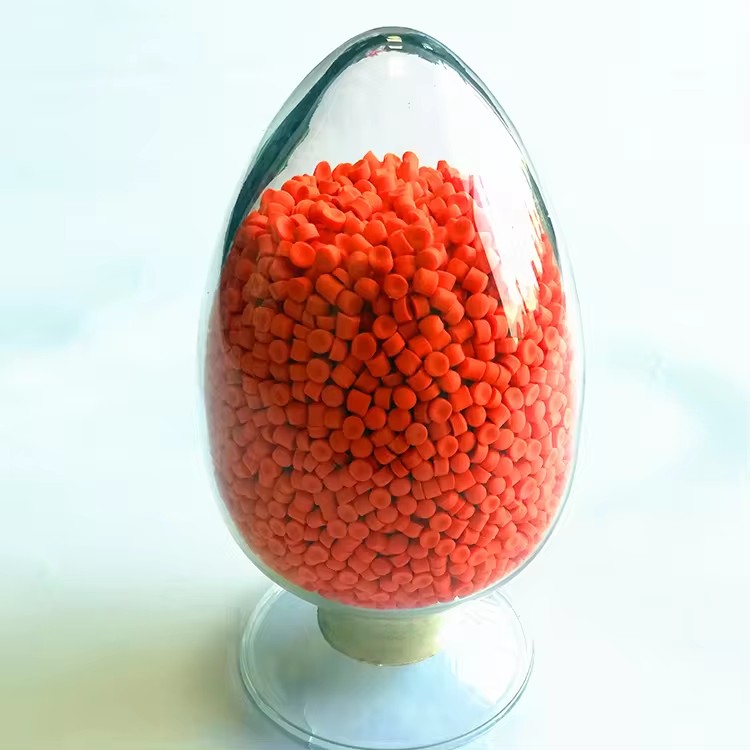
This material is made from polymer resin with added cross-linking agents, antioxidants, and other additives. It is produced through mixing, plasticizing, and granulation. The material contains no harmful substances, such as heavy metals, and offers excellent mechanical and electrical properties, along with a wide processing temperature range.
Mainly used as insulating material for cables.
Suitable for power cables, control cables, and instrument cables.
Because it is halogen-free, it does not release toxic gases when burned, making it ideal for high-safety environments such as nuclear power plants, subways, tunnels, high-rise buildings, and other sensitive areas.
Excellent Mechanical Properties: High tensile strength and elongation at break ensure cable reliability.
Good Electrical Properties: High volume resistivity and voltage resistance make it suitable for insulation.
Heat Resistance: Can operate long-term in high temperatures; typical XLPE cables are rated up to 90°C.
Chemical Resistance: Tolerates acids, alkalis, and oils.
Environmentally Friendly: Halogen-free formulation prevents the release of harmful gases during combustion.
Density: 0.98 ± 0.03 g/cm³
Tensile Strength: ≥10 MPa
Elongation at Break: ≥200%
Heat Deformation: At 200°C, elongation under 0.2 MPa for 15 min ≤175%
Volume Resistivity (20°C): ≥1.0×10¹³ Ω·m
Tensile Strength Change: After 1000 hours at 90°C wet heat ≤ -30%
The wide processing temperature range ensures excellent performance during cable manufacturing.
| Testing items | VALUE | Typical Value | UNIT | Method |
| Density | 0.98±0.03 | 0.98 | g/cm3 | GB/T 1033 |
| Tensile strength | ≥10 | 14.5 | MPa | GB/T 1040.2 |
| Elongation at break | ≥200 | 340 | % | GB/T 1040.2 |
| Hot extension 200℃,0.2Mpa,15min | ||||
| Elongation under load | ≤175 | 90 | % | GB/T 2951.21 |
| Permanent change rate after cooling | ≤15 | 2 | % | |
| Heat deterioration 175±2℃,240h | ||||
| Change rate of tensile strength | ≤±30 | 12 | % | GB/T 2951.12 |
| Change rate of elongation at break | ≤±30 | -10 | % | GB/T 2951.12 |
| Impact brittle temperature | ≤15/30 | 0/30 | 个 | GB/T 5470 |
| Volume resistivity (20ºC) | ≥1.0×10¹³ | 1.5×10¹³ | Ω·m | GB/T 1410 |
| Volume resistivity (290ºC) | ≥1.0×10¹⁰ | 2.5×10¹⁰ | Ω·m | GB/T 1410 |
| Dielectric strength (20ºC) | ≥20 | 40 | MV/m | GB/T 1408.1 |
| Resistant to damp heat 90℃ relative humidity 85%,1000h | ||||
| Change rate of tensile strength | ≤-30 | -18 | % | EN60068-2-78 |
| Change rate of elongation at break | ≤-30 | -19 | % | EN60068-2-78 |
| Amount of HCl and HBr gas released | ≤2 | 0 | mg/g | GB/T17650 |
| PH value of combustion gas | ≥4.3 | 5.8 | / | GB/T17650 |
| Electrical conductivity of combustion gas | ≤10 | 5 | μs/mm | GB/T17650 |
| Hardness | 96±3 | 96 | 15A | GB/T 2411 |
 Angreen | Manufacturer of modified plastic cable granular materials
Jul. 02, 2024
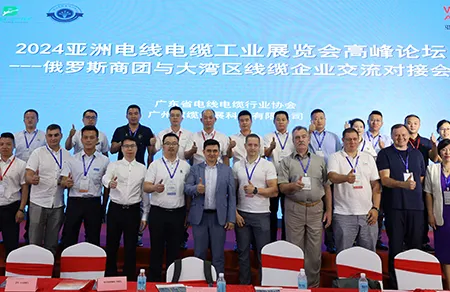 Angreen helps the 2024 Asia Cable Exhibition to be held successfully
Jul. 09, 2024
 TPU/TPE charging pile cable sheath and insulation material
Jul. 16, 2024