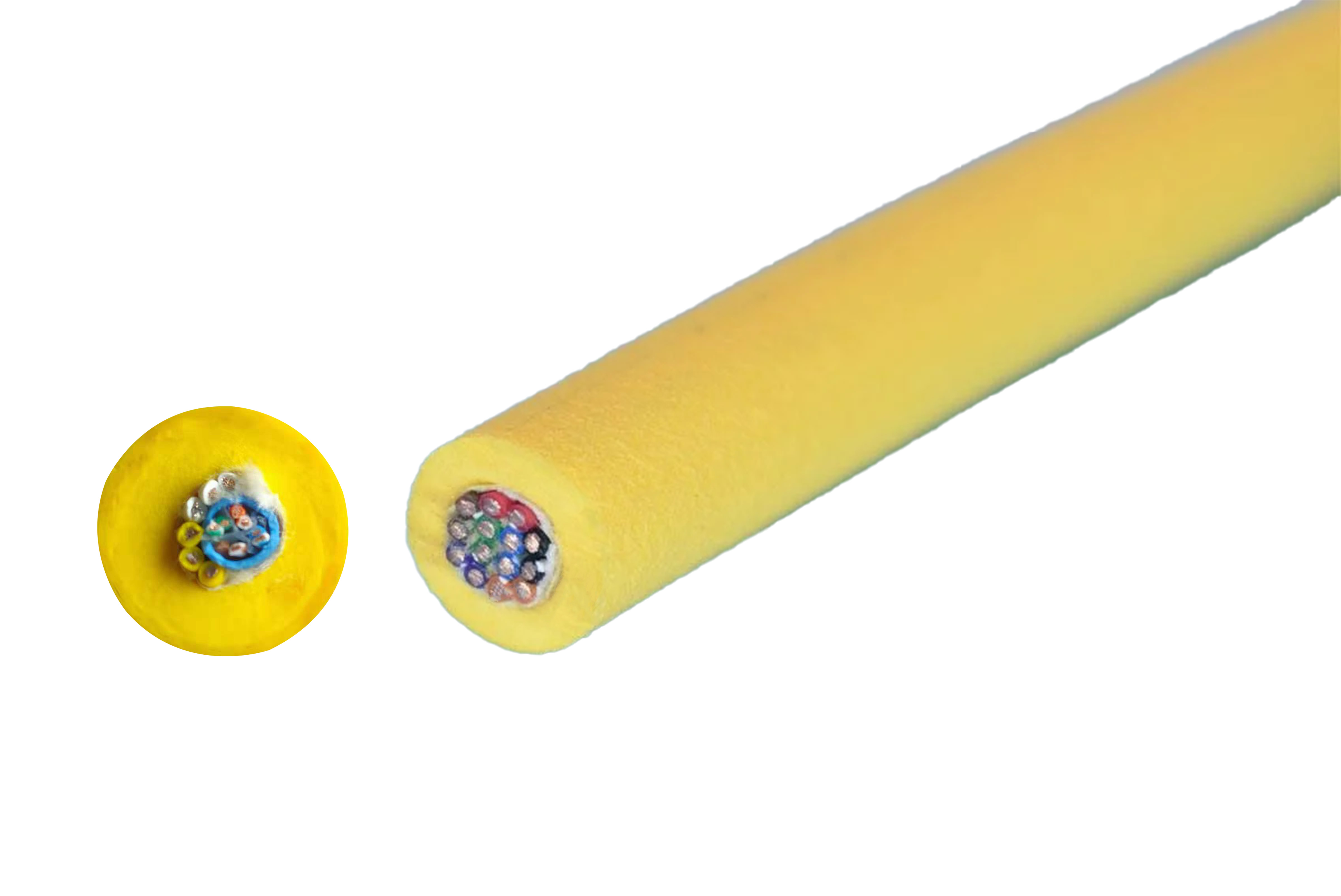
Foamed TPU is a thermoplastic polyurethane material foamed with a foaming agent. It is widely used in the wire and cable industry due to its unique combination of lightweight, flexibility, and durability.
Lightweight and Low Density: 0.4–0.8 g/cm³, similar to 3D printing filaments, suitable for applications requiring reduced weight.
High Tensile Strength and Crack Resistance: Ensures printed or manufactured parts remain durable.
Chemical Resistance: Resistant to acids, alkalis, oils, and corrosion.
Excellent Elasticity and Soft Surface: Comparable to flexible 3D printing filaments.
Hydrolysis Resistance: Maintains performance in humid environments.
Wear and Heat Resistance: Tolerates high temperatures during use or processing.
High-Quality Foam Structure: Dense surface, uniform internal pores, and high foaming rate achieved with advanced foaming technology.
New energy charging pile wires and cables
Plug materials and cable outer sheaths
Medical cables
Marine floating cables
Foamed TPU’s light weight, durability, and flexibility make it ideal for these applications.
Lightweight: Density can be controlled at 0.70–0.80 g/cm³. Cables can even float on water, similar to lightweight 3D printing filaments.
High Flexibility: Maintains TPU’s flexibility for easy installation and handling.
Wear and Tensile Strength: Inherits TPU’s toughness for harsh environments.
Thermal Insulation: Foam structure provides insulation for cables exposed to heat.
Environmentally Friendly: TPU is recyclable, meeting eco-conscious standards.
Raw Material Preparation: Dry TPU and compatibilizer to remove moisture for optimal performance.
Mixing: Combine TPU, foaming agent, antioxidant, polypropylene (PP), compatibilizer, and anti-hydrolysis agent at high speed. This process is similar to preparing TPU filaments for 3D printing.
Extrusion Granulation: Extrude the mixture to produce foamed TPU granules, comparable to FDM/FFF 3D printing filament production.
| Properties | Standard Value | Typical Value | Unit | Test Method |
| Physical properties | ||||
| Density | 0.4-0.8 | 0.5-0.8 | g/cm^3 | GB/T 1033 |
| Hardness (6mm plate) | 85±3 | 85 | HA | GB/T 2411 |
| Brittle temperature | ≤-60 | -60 | ℃ | GB/T 5470 |
| UL temperature grade | 90 | 90 | ℃ | UL |
| Mechanical properties | ||||
| Tensile strength before aging | ≥20 | 25 | MPa | GB/T 1040 |
| Elongation at break before aging | ≥400 | 603 | % | GB/T 1040 |
| Tensile strength retention rate | ≥70 | 76 | % | GB/T 2951.12 |
| Elongation at break retention rate | ≥70 | 91 | % | GB/T 2951.12 |
| Tear resistance | ≥40 | 50 | N/mm | CQC1103-2015 B |
| 80℃*168H Hot water resistance | ||||
| Tensile strength retention rate | ≥70 | 80 | % | |
| Elongation retention rate | ≥70 | 85 | % | |
| Electrical properties | ||||
| Volume resistivity at 20℃ | ≥1.0×10^10 Ω·cm | 1×10^11 Ω·cm | Ω·cm | IEC 60093 |



 Angreen | Manufacturer of modified plastic cable granular materials
Jul. 02, 2024
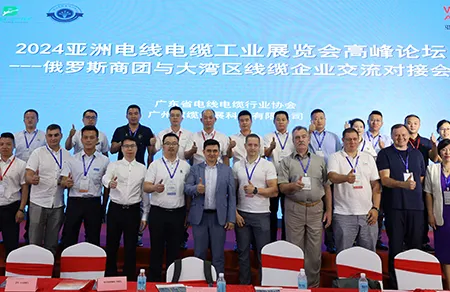 Angreen helps the 2024 Asia Cable Exhibition to be held successfully
Jul. 09, 2024
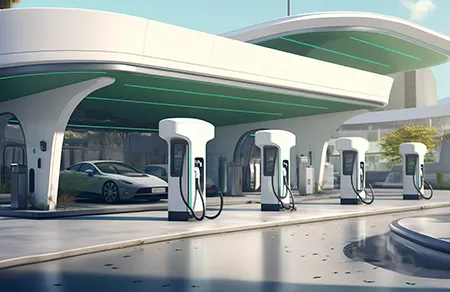 TPU/TPE charging pile cable sheath and insulation material
Jul. 16, 2024