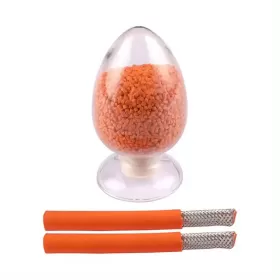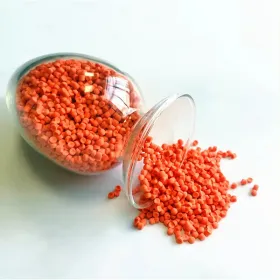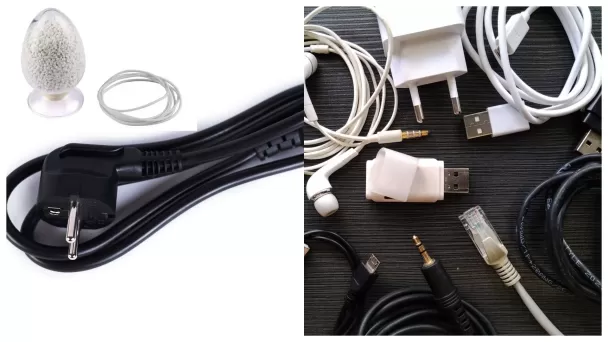
Household appliance power cord materials are mainly used for the production of power cords and power plugs for refrigerators, televisions and other household appliances. The main products include power cord materials, power plug materials, plug board shell materials, etc. Mainly TPE materials, EPDM materials, and CPE materials.
| EPDM Rubber Wire And Cable Material | ||
| EPDM rubber wire and cable material | PFXBK88589 | 125℃ irradiation cross-linked halogen-free FT2 flame retardant EPDM rubber |
| PFXBS65424 | Irradiation cross-linked EPDM rubber insulation | |
| PFXBS65569 | Vulcanized sheet EPDM rubber submersible pump cable insulation | |
| PFXBS65569H | Vulcanized sheet EPDM rubber submersible pump cable sheath | |
| PFXBS75568 | Irradiation cross-linked granular EPDM rubber submersible pump cable | |
| CPE rubber wire and cable material | PFXBK72428H | Irradiation cross-linked CPE wire and cable insulation |
| PFXBK72428J | Irradiation cross-linked CPE wire and cable sheath | |
Advantages: Heat resistant, ozone resistant, strong weather resistance, good electrical insulation.
Good flexibility, maintaining some elasticity even at low temperatures.
According to some EPDM wire material manufacturers, the operating temperature rating can reach 90℃, 105℃, and even 125℃.
Good resistance to water-treeing (very helpful for cable insulation).
A polymer material obtained by partially chlorinating polyethylene.
Advantages include heat aging resistance, ozone resistance, solvent/oil resistance, and good flame retardancy.
A wide hardness range (60–90A).
Commonly used as a sheathing material; compared to EPDM, its electrical insulation performance is slightly lower (but still very suitable for many power cord applications).
Below are some examples of actual cables/wires. While not all of these are "appliance-specific," their material structure is closely related to EPDM or CPE:
8/2 CPE Sheathed Portable Power Cable: Portable cable with a CPE sheath, flexible, suitable for mobile power environments.
18/8 CPE Jacket Power Cable: Finer wire diameter/multi-core design, suitable for light appliances or extension cords.
18/5 Flexible Power Cable (CPE): 5-core flexible structure, used in specific scenarios (e.g., with ground/switch wires).
RS PRO 4-Core CPE Sheath Power Cable: 4-core cable with a black CPE sheath, used for more complex wiring/multi-wire appliances.
Temperature Rating: Confirm the appliance's operating environment (high or low temperature) → When selecting materials such as EPDM, check their temperature resistance specifications.
Voltage/Current: Select cables with appropriate core count and cross-sectional area (AWG/mm²) based on the required voltage and current.
Flexibility/Bending Resistance: If the power cord requires frequent bending (e.g., in portable appliances), EPDM and CPE are a good combination.
Certification Standards: When selecting materials/cables, ensure they meet the safety standards of the target market (e.g., UL, VDE, or local certifications).
Mechanical Protection: Consider whether additional braided sheathing or reinforcement layers are needed to enhance tensile/abrasion resistance.
Cost vs. Performance Trade-offs: For mass production of appliance cables, assess the cost-effectiveness of EPDM/CPE.
EPDM and CPE compounds are widely used in home appliance power cords because of their strong stability, long-term durability and reliable electrical performance. For devices such as refrigerators, washing machines, televisions and small kitchen appliances, cable materials must remain flexible and safe under long periods of operation. EPDM insulation maintains elasticity and excellent dielectric strength while resisting hardening caused by heat or humidity.
CPE jacket compounds provide strong flame resistance, wear resistance and stability against oil and mild household chemicals, making them suitable for applications where cables may experience bending, friction or accidental pulling during daily use.
For manufacturers, these compounds support a steady extrusion process and deliver highly uniform cable dimensions. Their smooth surface finish, stable viscosity and predictable cross-linking behavior help ensure consistent quality across large production volumes. This also reduces the risk of defects, rework or scrap during cable processing, which is extremely important in high-speed manufacturing environments.
Household appliance cables must comply with strict international safety certifications, including UL, CSA, IEC and RoHS standards. EPDM/CPE compounds are formulated to meet these requirements through controlled flame retardancy, high insulation resistance and outstanding thermal stability.
EPDM supports operating temperatures ranging from 90°C to 125°C, which ensures stable performance even in appliances where internal components produce continuous heat. CPE jackets also help reduce smoke and improve fire protection, supporting FT2 flame test requirements for North American markets.
Because home-use electrical devices often run for many hours each day, cable materials need both long-term mechanical endurance and predictable electrical performance. The combination of EPDM insulation and CPE jacket layers minimizes the risk of insulation breakdown, surface cracking or cable deformation, while also improving the overall service life of the appliance.
FAQ 1: What advantages does EPDM offer for household power cord insulation?
EPDM delivers excellent electrical insulation, high elasticity and stable heat resistance. It avoids cracking under bending or temperature cycling, making it ideal for cables used in appliances that operate frequently or for long durations.
FAQ 2: Why is CPE commonly used as a jacket material?
CPE provides strong surface durability, flame retardancy and good resistance to oils and cleaning agents. It protects the inner insulation layer and maintains flexibility even after repeated bending or friction.
FAQ 3: Are EPDM/CPE cables suitable for high-temperature appliances?
Yes. EPDM-based insulation materials are available in 90°C, 105°C and 125°C grades. CPE jackets also maintain mechanical stability under elevated temperatures.
FAQ 4: Do these cable materials support irradiation cross-linking?
Both EPDM and CPE compounds are compatible with irradiation cross-linking. This process improves tensile strength, heat aging resistance and long-term durability, which are essential for appliance power cords.
FAQ 5: How do EPDM/CPE materials improve manufacturing efficiency?
These materials have stable extrusion flow, low shrinkage during cross-linking and good surface smoothness. This means fewer dimensional variations and reduced scrap during cable production.
FAQ 6: Can EPDM/CPE materials replace PVC in all applications?
Not always. PVC remains suitable for basic low-cost products. EPDM/CPE are preferred in appliances requiring better flexibility, higher temperature tolerance or improved environmental resistance.
FAQ 7: Are these materials environmentally friendly?
Formulations can be made halogen-free and compliant with RoHS and REACH. This helps reduce harmful emissions and supports environmentally responsible cable manufacturing.
FAQ 8: What types of appliances commonly use EPDM/CPE cables?
They are used in extension cords, power strips, refrigerators, washing machines, induction cookers, microwave ovens, televisions and general home electronics that require reliable long-term performance.
Electrical Performance: High dielectric strength and stable insulation resistance, even after long-term heat exposure.
Mechanical Durability: Strong tensile and tear resistance, suitable for repeated bending and everyday handling.
Flame Retardancy: CPE jackets meet FT2 requirements and support safer appliance operation.
Chemical Resistance: Jacket layers tolerate household oils, cleaning fluids and mild chemical environments.
Aging Stability: Cross-linked EPDM maintains flexibility and avoids cracking under long-term temperature cycling.